When AI burst onto the scene, many people assumed the days of the copy-editor were numbered. Why pay a human to check commas and catch typos when a machine could do it in seconds? Yet something unexpected has happened: copy-editors and proofreaders in New Zealand have never been busier. It turns out that the flood of AI-generated content hasn’t replaced editors; it’s created an urgent need for more of them.
So what exactly does a copy-editor do, and could it be a career worth considering?
What does a copy-editor and proofreader do?
Before we can begin thinking about how to become a copy-editor or proofreader, it helps to understand what the work actually involves. A good place to start is by defining a few terms:
- copy-edit: (verb) edit (text) by checking its consistency and accuracy.[1]
- proofread: (verb) read (printer’s proofs or other material) and mark any errors.[2]
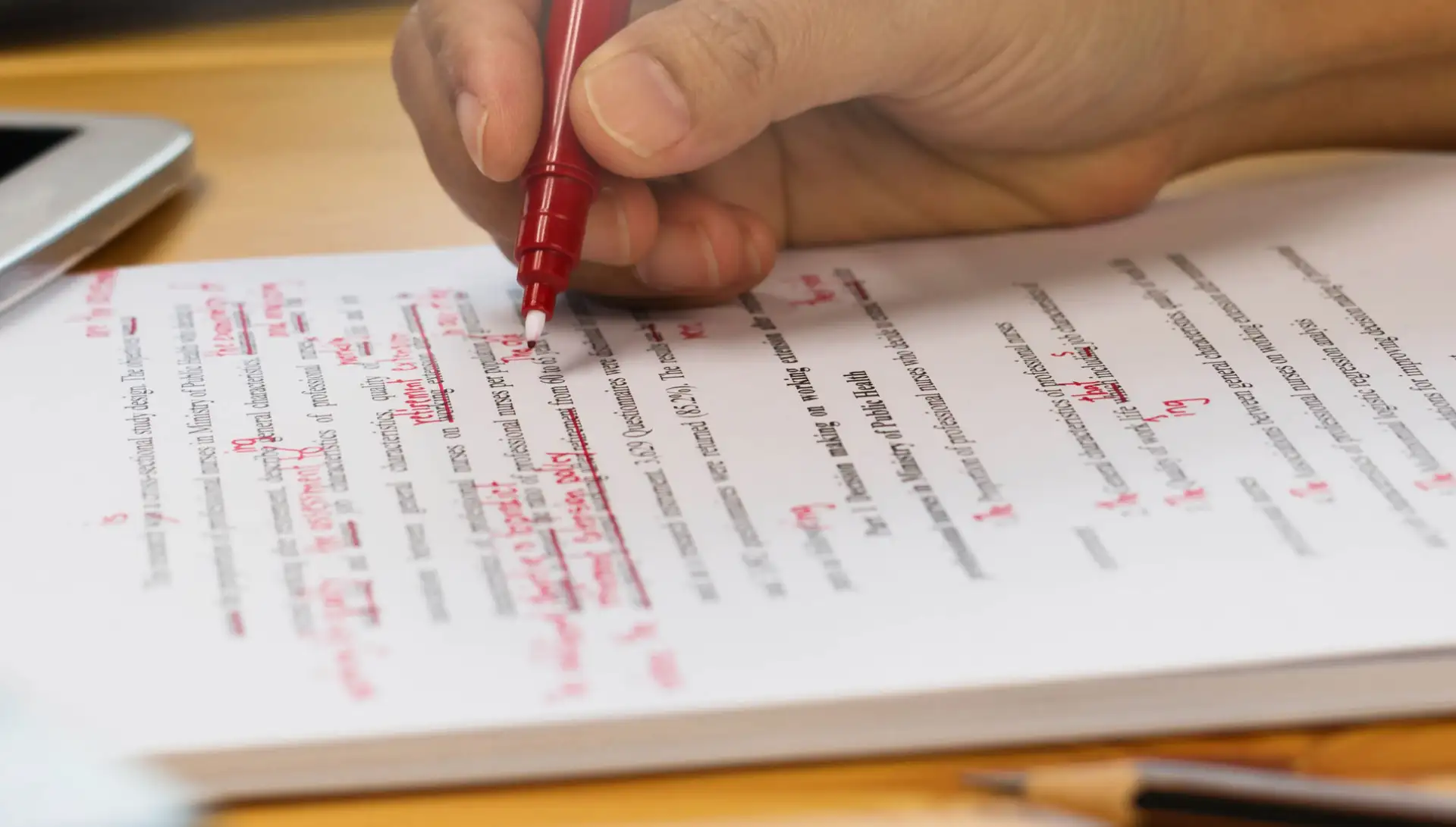
When a copy-editor receives a text, they focus on whether it’s clear, concise, correct, coherent and complete. These are often referred to as the five Cs of copy-editing. In simpler terms: does the text make sense, and are there any errors in grammar, punctuation, spelling or content?
Copy-editing also takes place across many fields, including academic writing, fiction, medical communications and marketing, to name just a few. Entering a specialised field of editing (think medical journals or university-level dissertations) may require some background knowledge or experience in the subject. After all, copy-editors must ensure that the text is not only correct but also coherent, which means they need to understand what they’re reading.
Different texts also require different levels of editing. A well-written, polished document may only require a light copy-edit or even just a proofread (think dotting the i’s and crossing the t’s). By contrast, a text written by an author whose first language isn’t English may need a more substantial edit.
In some cases, particularly in fiction, authors may rely on editors to help shape the manuscript. This type of work is known as structural or developmental editing. Here, the editor may suggest improvements to the narrative flow, guide the overall coherency and structure of the document and sometimes even rewrite significant portions of the text (with the author’s approval, of course. We remain editors, not ghostwriters!)
Proofreading, on the other hand, usually happens at the very end of the process. It serves as a final check for spelling errors such as typos, punctuation mistakes, formatting issues or small problems that may have slipped through earlier edits. Rather than assessing for coherence, accuracy or completeness, proofreading focuses on delivering a final, polished piece of text.
So now that we’ve settled what copy-editors and proofreaders actually do, how do you become one?
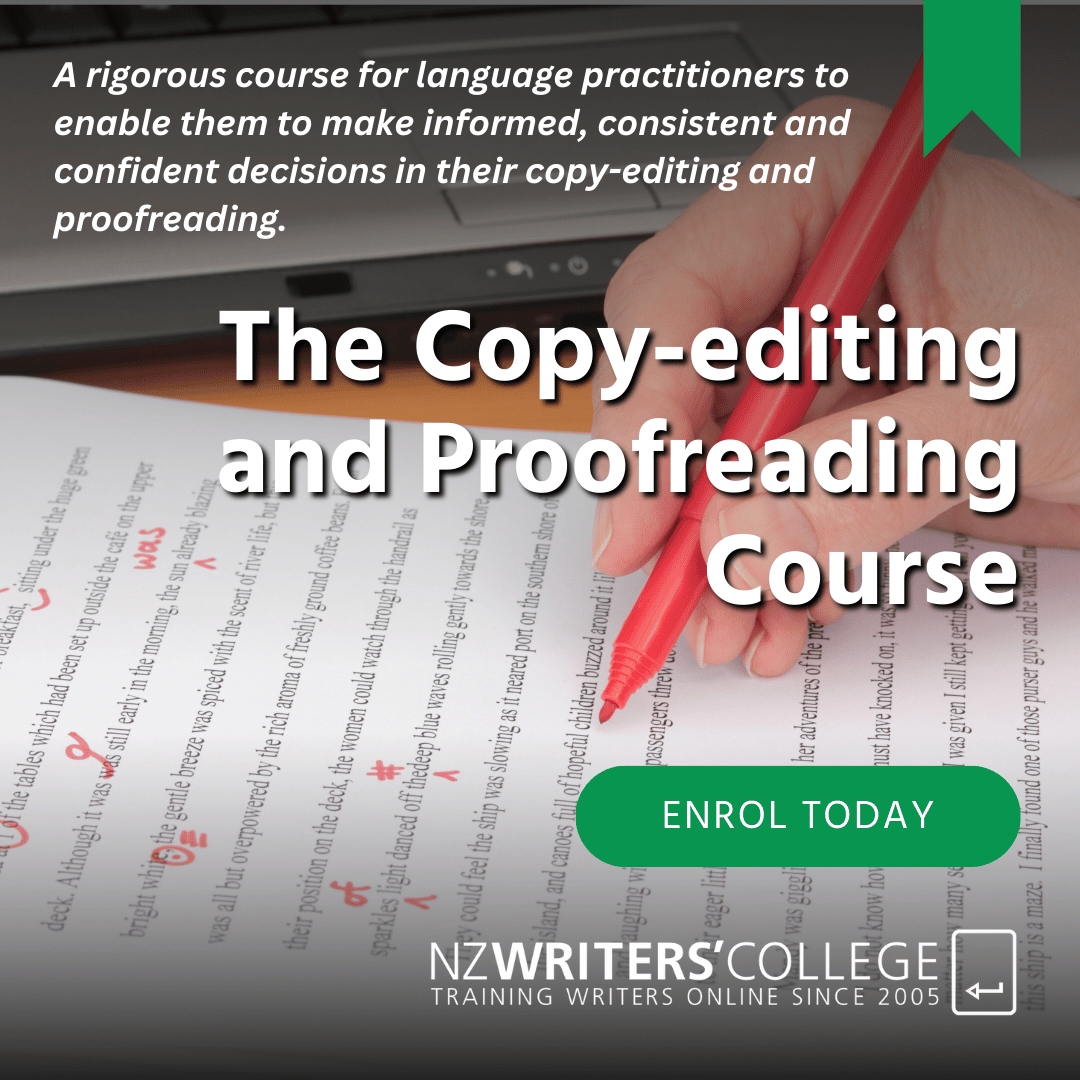
How to train to become a copy-editor and proofreader in New Zealand
There is no single ‘degree in copy-editing or proofreading’, although a background or degree in languages, journalism or publication may be helpful. If you’re interested in academic editing, medical communications or other specialised, niche areas, you may also need subject knowledge in the field you want to work in. For example, editing articles for a medical journal such as The Lancet may require a degree in science or medicine.
There are also many courses available online to help you build the necessary skillset and develop confidence in your editing abilities:
- NZ Writers’ College: The Copy-editing and Proofreading course
- NZ Writers’ College: The Advanced English Grammar Course
- NZ Writers’ College: The Mastering Punctuation Course
- New Zealand Institute of Business Studies: Proofreading and Editing Course
- Whitireia and WelTec New Zealand: Copy-editing 1 (Micro-credential)
- Training courses by the Chartered Institute of Editing and Proofreading (CIEP)
- American Medical Writers Association: AMWA Certificate in Medical Editing
As some of these courses cost more than others, it’s worth considering the direction you want to take and what is most relevant to your location. For example, a CIEP course focused on British English may not be the best choice if you plan to work mainly in an American publishing environment. Research the requirements of the field you want to enter before committing time and money to training.
It’s also essential to invest in a good dictionary. Once you are clearer about the field you want to work in, consider investing in appropriate style guides and other reference manuals relevant to that field, such as the New Oxford Style Manual. Academic editing relies on several major style guides, including the Publication Manual of the American Psychological Association (APA), the Modern Language Association (MLA) Handbook and the Chicago Manual of Style. As these can be very costly, it’s worth making sure you purchase the ones most relevant to the work you plan to do.
The Institute of Professional Editors (IPEd) is a professional association for editors in Australia and New Zealand. They offer membership, accreditation, training and mentorship.
How to establish yourself as a working copy-editor and proofreader in New Zealand
Once you’ve established a solid skillset, you can start looking for opportunities. These can come in many forms, including applying for editorial internships at international publishing houses (e.g. Editorial Internship at Red Hen Press or the Editorial Internship at Candlewick Press), contacting journals about associate editorial roles or simply freelancing as an editor and building your own business.
This is where the legwork begins. Consider having your CV and a cover letter professionally prepared, as these will be the first documents you attach when expressing interest in work. LinkedIn can be a valuable source for career openings, but postings there move quickly, so it’s best not to rely on it alone.
Finally, remember that editing is a competitive field. Be patient but persistent. Keep applying, keep reaching out and keep building your resumé. Opportunities rarely appear overnight, but once you start building some credibility and experience, they do come your way.
Emma Hill once wrote, ‘The first draft is black and white. Editing gives the story colour’. Patience, practice and training are the crayons in the box, helping you develop the skills needed to become a copy-editor and proofreader. Although these crafts take time to develop, for those who enjoy working with language, it can be an immensely rewarding career.
References:
- Concise Oxford English Dictionary. 12th edition. Oxford University Press, 2011, p. 316.
- Concise Oxford English Dictionary. 12th edition. Oxford University Press, 2011, p. 1150.