Society does not always recognise a reason for loss or grief, and this can lead to invisible grief. Writing an article about personal invisible grief, and experimenting with drafting different endings for the piece, brought an unexpected lightness to the situation.
An NZ Writers’ College course I was enrolled in taught the skill of writing different endings for a piece of writing. Different endings can create different tones within an article; some may sound angry, others impersonal, and some will cause the reader to smile. Like fitting Cinderella’s glass slipper on the stepsisters’ feet, some will simply not fit.
Writing itself can be an easier way to tell a story than saying the words out loud, and this exercise about writing endings provided an unexpected opportunity to develop a skill, enjoy the process and soften an experience.
Identifying invisible grief
There are many situations where we can feel loss and experience grief, apart from the obvious loss of a parent or spouse. These include the loss of a relationship, a home, a job opportunity, a sibling or a pet, as well as infertility, redundancy or illness. These situations are very often not recognised by society as a reason for grief; however, they are experienced by many and can become an invisible grief that is heavy to carry and often carried alone.
My loss was the ability to have my own child: first in my thirties, through a medical diagnosis, and again in my fifties, when I continued researching the diagnosis. Society often assumes those without children have made that decision and misjudges the enormity of the situation for those who are childless by circumstance, rather than child-free by choice.
Drafting different styles of endings to find the best fit
I was taught four types of endings on the New Zealand Writers’ College Writing Articles for Websites and Blogs Course, and I’ve used these particular endings to illustrate how this exercise can identify the right ending for a piece of writing.
I found this was an exercise in bravery, as two of the endings held my topic gently and two of the endings required a closer look at the raw emotion of the situation.
The summary ending
For this topic and my situation, the summary ending would best suit a piece referencing the first specialist appointment. It was a difficult conversation that was upsetting and stark, and the experience would translate well into a summary ending which focuses on the key points and is very factual. It would sound a little like this:
The specialist ended the appointment by reiterating the key points of the diagnosis and the medical options going forward. They checked that I had understood that having my own child was no longer an available option for me.
Many years on, I find this style of ending captures the politeness my specialist and I showed each other and the numbness I felt leaving her office that afternoon.
The poetic ending
A poetic ending offers a final insight for a piece of writing. It may include a quote or observation and can express emotion and feeling. My draft for a poetic ending includes a quote you may be familiar with. Here’s how I would write it:
In 1897, the Scottish author Reverend John Watson included the following in a Christmas message: ‘Be kind. For everyone you meet is fighting a hard battle.’ A diagnosis like mine heightens your awareness of others and their battles. It doesn’t make yours any less overwhelming or heavy to carry, but it does allow you to lean into others to offer and receive support.
This ending is a personal favourite; it allows for emotion to be included in a creative way. Jason Berek’s piece on Medium titled ‘My heartfelt guide to writing about grief’ is beautifully finished with a poetic ending for his dog and companion, Jedi.
The ‘see what I mean?’ ending
This is a tough ending for grief, as grief is personal, a different experience for every person. However, this is a good ending to use for personal pieces. It asks the reader to ‘walk a mile in another’s shoes’ and clarifies whether they have understood the piece of writing.
Asking the reader to understand invisible grief, something society isn’t familiar with, can be a challenge, and because of this the ‘see what I mean?’ ending can be quite direct and quite confronting when used for this topic.
This is how it could be written:
Can you see what I mean? I’d discovered there was no opportunity for me to have my own child. Suddenly all those firsts – first pregnancy, first birthday, first day of school – they all just disappear. I thought I could have all those experiences, but I couldn’t. Can you understand all that I felt I had lost?
This ending can be as confronting for the writer as it is for the reader, but it really allows for the emotional rawness and depth of the situation to be seen.
READ MORE:
Three challenges of writing a human-interest story about your own life
The life altering magic of completing a writing course
So far, each of these endings has suited a different purpose and tone. The fourth, the ‘looking ahead’ ending, is the one I chose to finish my own piece.
Looking ahead – the ending that fits well
The ‘looking ahead’ ending is what I ended up choosing for my piece. This ending can offer a glimpse into the future, highlight an upcoming event or indicate a direction to follow. Having completed additional research into my diagnosis, the ‘looking ahead’ ending fits my piece well, as it allows for optimism and hope, shows a way forward and illustrates my invisible grief at this point.
Jody Day wrote in Living the Life Unexpected that ‘stuck in grief, in sadness, we forget how to play. And in doing so, we forget how to live’. (Bluebird, London, 2016, p. 262). Now in my fifties, I am armed with a decades-old diagnosis and new information, creating a new environment to live within. I am embracing my tribe, the online network of supportive women who are childless like me, learning to soften my grief and learning to live again.
Identifying the ending that best fits your article
The benefit of drafting different endings is that, through exploring different tones and styles, there is the opportunity to identify the ending that fits. An ending that isn’t right will feel awkward and the words won’t sit well, but the right ending will fit like Cinderella’s shoe and the words will feel comfortable.
When the writing is very personal, finding the right ending is important for the reader, for the topic and for yourself as the writer. The ending needs to complete the piece and not leave the reader guessing about what happens next. It should be respectful and leave you and your reader with a complete experience.
Looking ahead, maybe, like me, you will find a way to put into words an experience that has left its mark on your life, and a way to identify those all-important next steps on your journey to being kinder to yourself and others.
About the Author

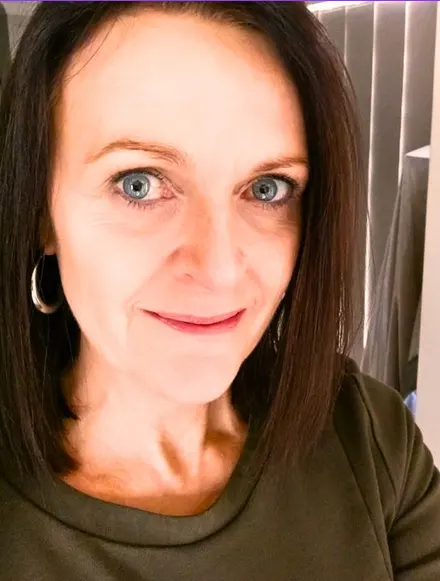
Gabrielle Frayling has several decades of solo life experience, including travelling to places that thrill, challenge and delight. These experiences are balanced with a love of gardening, reading and cooking. Gabrielle enjoys stretching her writing skills across these topics, in particular around the experiences of those who at times travel life or the globe by themselves.